


SUNMOONBAY GEM-CUTTING COURSE
STEP 2: GEM-CUTTING EQUIPMENT AND TOOLS
Beginner's Guide to Faceting Machines, Dops, Cutting Laps and Polishing Tools
Learn what you need before investing in gemstone-cutting equipment.
Introduction
Faceting is the process of cutting a gemstone into a series of carefully positioned flat surfaces called facets. These facets are arranged to improve the stone's appearance, proportions and interaction with light.
Successful faceting requires suitable equipment, careful measurements, patience and practice. Beginners should learn the purpose of each tool before purchasing machinery or attempting to cut valuable rough gemstones.
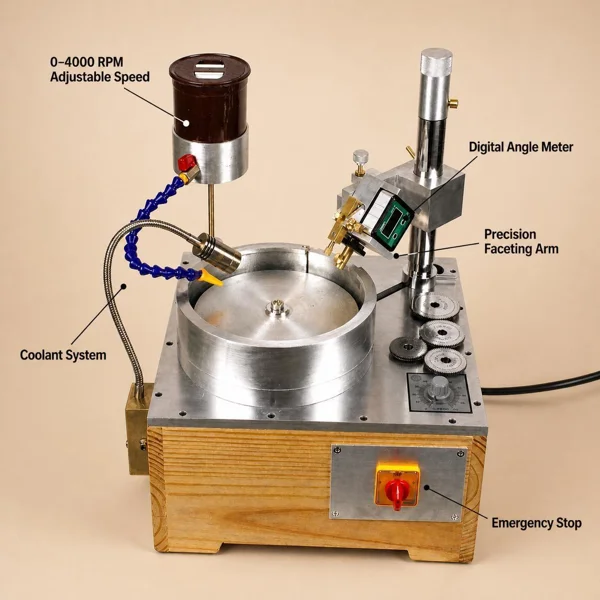 |
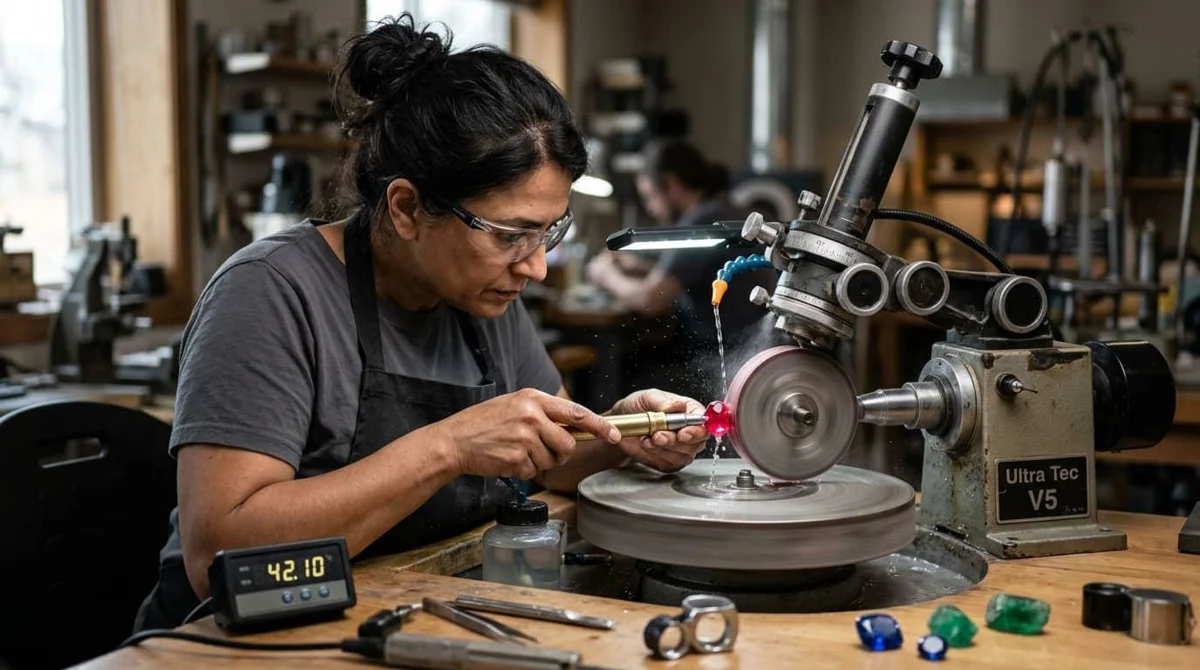
Gemstone faceting machine for beginner gem cutting |
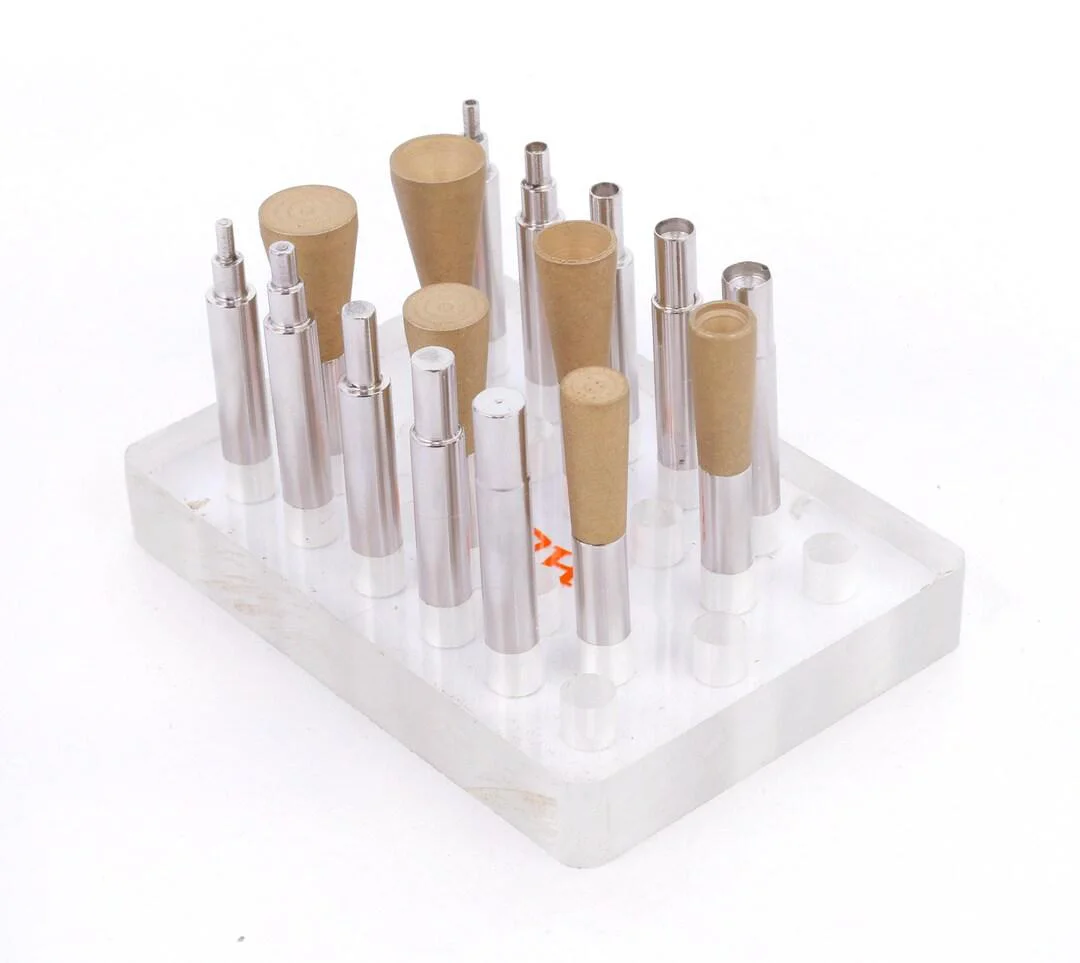 |
Metal dop sticks used to hold gemstones during faceting |
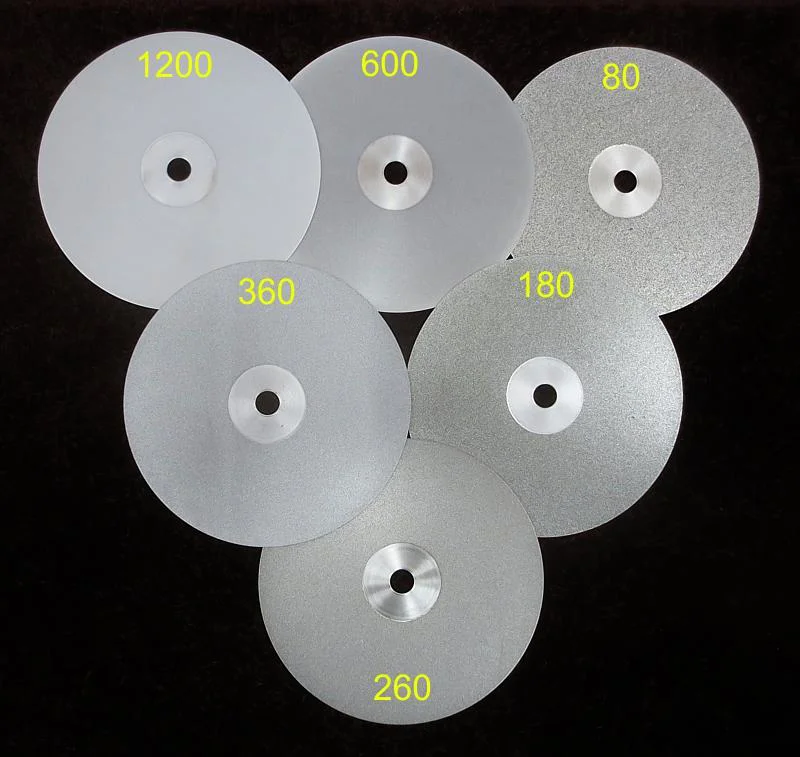 |
Diamond cutting and polishing laps for gemstone faceting |
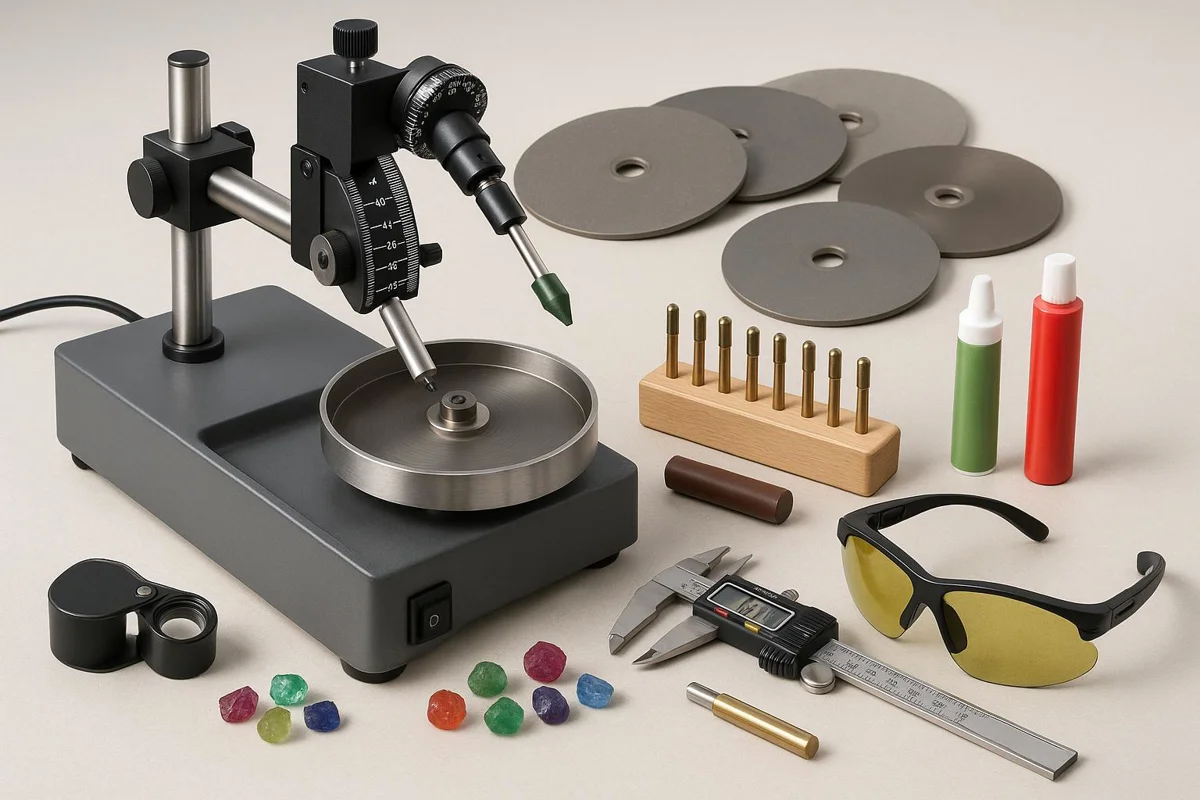 |
Safety equipment and tools for a gemstone faceting workshop |
 |
gem-cutting-equipment-beginners |
1. The Faceting Machine
The faceting machine is the main piece of equipment. It supports the gemstone and allows the cutter to control the angle, position and rotation of each facet.
Look for a stable machine with reliable angle adjustment, a secure mast or cutting head, a suitable index system, compatible laps, and access to replacement parts and servicing.
Before buying, confirm the electrical rating, motor condition, lap diameter, accessories included and availability of local technical support.
2. Mast, Quill and Angle Controls
The mast supports the cutting assembly. The quill or handpiece holds the dop and gemstone. Angle controls help set the inclination of the stone, while the index gear controls its rotational position.
These controls work together to produce symmetrical facets. A beginner should learn how to read the machine's angle scale and index positions before cutting a real gemstone.
3. Dops and Stone-Mounting Materials
A dop is a rod that holds the gemstone during cutting. Dops may be made from brass, steel or other suitable materials, depending on the machine.
Dop wax or an appropriate adhesive secures the stone to the dop. The mounting method must suit the stone, the cutting process and the material being used.
Keep the stone securely mounted and check alignment before starting the machine. Follow the wax or adhesive manufacturer's instructions and avoid overheating gemstones during mounting or transfer.
4. Cutting Laps and Abrasives
A lap is a rotating disc used with a suitable abrasive or polishing compound. Different laps and abrasive grades are designed for different stages of gemstone cutting.
- Coarse cutting: removes material and establishes the general shape.
- Pre-polishing: removes scratches left by earlier cutting stages.
- Final polishing: produces the desired surface finish using a compatible lap and polishing compound.
There is no single abrasive or lap that works best for every gemstone. Select materials according to the gemstone's hardness, cleavage, treatment status and the machine manufacturer's guidance. Keep laps clean and avoid contaminating fine-polishing surfaces with coarse grit.
5. Measuring and Inspection Tools
A beginner benefits from a loupe, suitable lighting, a digital scale and a caliper. These tools help document rough-stone dimensions, inspect visible inclusions, monitor weight and assess the finished gemstone.
A loupe and visual inspection are useful for observation but cannot conclusively identify every gemstone. Use appropriate gemmological instruments and professional laboratory services when reliable identification is required.
6. Workshop Safety
- Read the machine manual before use and keep guards in place.
- Secure the machine on a stable workbench.
- Use the recommended water or cooling system where required.
- Prevent gemstone dust and slurry from spreading into the workspace.
- Use suitable eye protection and follow the manufacturer's safety instructions.
- Keep loose clothing, jewellery and long hair away from rotating machinery.
- Disconnect power before cleaning, adjusting or changing equipment.
- Never touch a rotating lap or attempt to stop it by hand.
Do not use a lap, abrasive or mounting compound unless it is compatible with the equipment and intended task. Seek supervised training before operating unfamiliar machinery.
7. Beginner Equipment Budget
In Sri Lanka, listed faceting machines can cost approximately LKR 160,000 to LKR 200,000 for certain single- or double-machine configurations. Prices vary by model and included accessories.
Small consumables such as dop sticks, dop wax and some laps can cost much less, but these items do not replace a suitable faceting machine. Remember to budget for additional laps, abrasives, measuring tools, safety equipment, maintenance and practice material.
Before purchasing a machine, compare the full package rather than the headline price. Ask the seller what is included, which lap sizes are supported, and whether setup guidance and repairs are available.
8. Practical Beginner Exercise
- Identify the main parts of a faceting machine using its manual or a demonstration.
- Learn the purpose of the mast, quill, index gear, angle scale, dop and lap.
- Practise reading angles and index positions with the machine switched off.
- Inspect practice material and record its dimensions and weight.
- Review the safety checklist with an experienced cutter before operating the machine.
Do not begin with valuable sapphire rough. Start with inexpensive practice material and supervised instruction.
Step 2 Summary
The essential lesson is to understand the equipment before buying or cutting. A suitable faceting machine, secure dops, compatible laps, abrasives, measuring tools and safe working practices form the foundation of a beginner's setup.
NEXT: STEP 3
Planning the Cut
Learn how to examine rough material, plan a design, consider colour orientation, estimate weight retention and choose a suitable faceting pattern.
SUNMOONBAY | Gemstone Education and Faceting Fundamentals
Featured Products


