


SUNMOONBAY • FREE GEM-CUTTING COURSE
Lesson 1: Understanding Rough Gemstones Before Cutting
Learn how to examine rough sapphire and other gemstone materials before deciding how they should be cut.
This beginner-friendly lesson explains crystal shape, color, transparency, inclusions, fractures and the basic decisions a lapidary cutter makes before using a faceting machine.
Start Lesson 1 View All 7 Lessons
Free educational material • Beginner level • Learn at your own pace
1. What Is a Rough Gemstone?
A rough gemstone is mineral or gem material that has not yet been shaped and polished into its intended finished form. Some rough stones retain natural crystal faces, while others have irregular surfaces caused by geological processes, mining or breakage.
In Sri Lanka, sapphires and other gem minerals are an important part of the country's gem industry. However, a rough stone's appearance alone cannot prove its identity, natural origin, treatment history or commercial value.
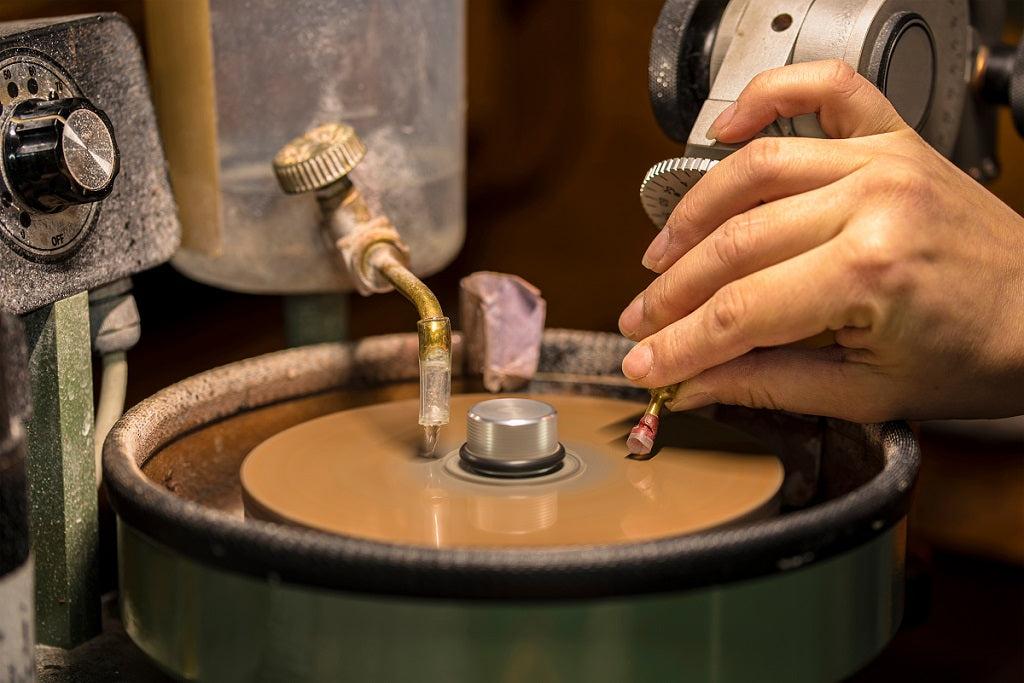
Gem cutting, also called lapidary work, transforms suitable material into a finished gemstone. The cutter removes material strategically to improve appearance, symmetry, polish and the way light interacts with the stone.
Three Common Types of Gemstone Finishing
- Faceting: Creating flat, carefully positioned surfaces called facets. This is common for transparent gemstones such as sapphire.
- Cabochon cutting: Shaping a stone with a smooth, curved top, often used for opaque or translucent material and certain stones displaying optical effects.
- Carving and freeform work: Creating decorative shapes according to the material and intended design.
2. How to Inspect Rough Gemstones
Before cutting, examine the stone carefully. A good inspection helps you identify visible problems, compare possible cutting directions and decide whether further testing is necessary.
Step 1: Clean and observe the stone
Use an appropriate, gentle cleaning method if the material permits it. Some minerals are sensitive to water, chemicals, heat or sudden temperature changes, so do not use an unknown cleaning treatment. Observe the stone under good neutral lighting.
Step 2: Examine the exterior
Look for natural crystal faces, broken surfaces, attached host rock, visible cracks and weathered areas. The exterior can offer useful clues, but it does not reveal every internal feature.
Step 3: Use magnification
A loupe or microscope can help you inspect surface damage and visible internal features. Rotate the stone slowly and examine it from different directions. Do not assume that a feature seen at one angle represents the entire stone.
Step 4: Record your observations
Photograph the stone, note its approximate dimensions and record any measurements obtained using suitable equipment. Keep observations separate from conclusions that require professional testing.
Beginner tip: Never rush to cut an expensive stone. Inspection and planning can help prevent avoidable material loss.
3. Understanding Color and Transparency
Color can strongly influence the appearance and desirability of a finished gemstone. In rough sapphire, color may vary throughout the crystal rather than appearing evenly distributed.
Examine the stone under consistent lighting. Notice whether the color appears concentrated in one region, whether some areas look lighter or darker, and whether the material transmits light.
- Color distribution: Uneven color may affect where a cutter chooses to position the finished stone.
- Transparency: Transparent, translucent and opaque materials may suit different styles of cutting.
- Surface appearance: Dirt, weathering and the rough exterior can disguise the color of the material inside.
- Lighting: Different light sources can change the apparent color, so comparisons should use consistent conditions.
Do not remove a large amount of material simply to reveal a better color. First consider the possible finished shape, internal condition and likely material loss. For valuable rough, seek an experienced cutter's opinion before proceeding.
4. Inclusions and Fractures
Inclusions are features enclosed within a gemstone or sometimes extending to its surface. They may include mineral crystals, fluid-filled features, growth structures or other internal characteristics. Fractures are breaks or cracks in the material.
These features can affect durability, appearance and the practical options available to a cutter. Some inclusions are useful gemological evidence, but no single inclusion automatically proves that a stone is natural or identifies its origin.
What should a beginner look for?
- Visible cracks that may weaken the stone during cutting.
- Large inclusions that may affect the planned finished shape.
- Surface-reaching fractures that require careful evaluation.
- Areas where the material appears cloudy or heavily included.
Do not perform scratch tests or other destructive tests on valuable rough gemstones. A qualified gemologist can help assess the material when its identity or condition is uncertain.
5. Crystal Shape and Cutting Options
The original shape of a rough stone can influence the cutting plan. Some crystals may offer a useful outline for an oval, round, cushion or other faceted shape. Irregular or fractured pieces may require different solutions.
A cutter considers several questions:
- Which areas of the stone are most suitable for the finished design?
- Can important fractures or unwanted inclusions be avoided?
- Will the proposed shape preserve an attractive color and appearance?
- How much material is likely to be removed?
- Is the rough material better suited to faceting, cabochon cutting or another use?
The largest possible finished stone is not always the best result. A smaller, well-proportioned gemstone may look better than a larger stone with poor symmetry, visible damage or an unattractive cut.
6. Weight, Yield and Cutting Decisions
Gemstone weight is commonly measured in carats. One metric carat equals 0.2 grams. Cutting usually reduces the original rough weight because material must be removed to create the finished shape and polish.
Cutting yield is the finished gemstone weight expressed as a percentage of the original rough weight.
Formula: Cutting yield (%) = finished weight ÷ rough weight × 100.
Simple Example
Suppose a piece of rough material weighs 10 carats and the finished stone weighs 3 carats.
Yield = 3 ÷ 10 × 100 = 30%.
This is an example for learning the calculation, not a prediction of the yield from sapphire or any other specific material. Actual yield depends on the rough stone, its condition and the cutting design.
Yield alone does not determine profitability. The final color, clarity, cut quality, durability, identity, treatment status, market demand and total costs all matter. Do not purchase rough material based only on an estimated finished weight or a seller's valuation.
7. Beginner Practice Exercise
For your first exercise, use an inexpensive, suitable training specimen. You do not need a faceting machine to complete this observation activity.
- Photograph the specimen from several angles.
- Record its approximate dimensions and weight if you have an appropriate scale.
- Describe the visible color and transparency under consistent lighting.
- Use a loupe to note visible surface damage, inclusions or fractures.
- Sketch a possible finished outline without cutting the stone.
- Write down what you still need to learn before deciding whether to cut it.
This exercise develops observation skills and helps you understand why careful planning comes before machine work.
8. Safety Before Cutting
Gem cutting involves moving machinery, rotating laps, water or other fluids, and sometimes hazardous dust or polishing compounds. Follow the machine manufacturer's safety instructions and the safety data for every compound used.
- Use appropriate eye protection and machine guards.
- Control dust using suitable methods; avoid inhaling fine mineral or abrasive particles.
- Keep hands, loose clothing and hair away from moving components.
- Follow the equipment's electrical and water-safety requirements.
- Never clean, adjust or service moving equipment while it is running.
- Learn under qualified supervision when you are unfamiliar with the machine.
Safety first: Do not improvise machine settings or handling methods based on a picture or a short online lesson. Safe operation depends on the actual equipment, material and working environment.
Frequently Asked Questions
Can beginners learn gemstone cutting for free?
Yes. Beginners can learn the basic concepts, terminology, planning and observation techniques through free educational resources. Practical machine operation requires suitable equipment, training and safety precautions.
How can I tell if rough blue material is sapphire?
Color alone cannot identify sapphire. A gemologist may use suitable optical and physical measurements, microscopic examination and, when necessary, laboratory testing.
Should I cut every rough gemstone I buy?
No. Some material may be unsuitable for faceting or may be better left uncut. Consider its condition, possible use, expected material loss and the cost of processing before making a decision.
What equipment do I need to start faceting?
A suitable faceting machine, compatible laps and abrasives, a dop system, measuring tools and appropriate safety equipment are among the essentials. The correct setup depends on the material and machine.
Does a high cutting yield guarantee a valuable gemstone?
No. Yield is only one factor. Finished appearance, quality, identity, treatment, durability, demand and costs also influence the value of a gemstone.
Can an AI gem scanner certify a gemstone?
No. An AI tool can support learning and preliminary observation, but it should not be treated as definitive authentication or a substitute for qualified gemological examination or laboratory certification.
Continue the Free Gem-Cutting Course
Complete the lessons in order to build your knowledge before attempting practical cutting.
- Lesson 1: Understanding Rough Gemstones — current lesson.
- Lesson 2: Gem-Cutting Equipment and Tools.
- Lesson 3: Planning the Cut and Evaluating Rough Material.
- Lesson 4: Beginner Faceting Techniques.
- Lesson 5: Polishing and Finishing.
- Lesson 6: Gemstone Quality, Weight and Value.
- Lesson 7: Workshop Safety and Beginner Practice.
The next lesson will explain the equipment used in gemstone cutting and the purpose of each tool.
Explore More Gemstone Education
- Sapphire Refractive Index (RI) Guide
- Sapphire Inclusions Guide
- Sapphire Color Guide
- Natural vs. Synthetic Sapphire
- How to Buy Natural Sapphire
- Explore the SunMoonBay AI Gem Scanner
- Watch SunMoonBay on YouTube
Learn. Observe. Cut with Care.
Continue learning with SUNMOONBAY, your online destination for gemstone education, sapphire knowledge and beginner lapidary learning.
Visit SunMoonBay Watch Our YouTube ChannelEducational disclaimer: This lesson provides general information and does not replace professional gemological testing, machine-specific training or workshop safety instruction.
Featured Products

